With hundreds of wineries, orchard-side fruit stands, breweries, and cideries connected by the BC Ale Trail, the Thompson Okanagan has firmly established itself as one of Canada’s premier culinary destinations.
The Thompson Okanagan is also the traditional, unceded territory of three Salish nations and home to nearly 30 Indigenous communities. Their culinary traditions enrich the region’s food culture with ingredients and dishes such as wines, wild berries, venison and bison, salmon, and, of course, bannock.
Be sure to add these must-visit Indigenous culinary spots to your itinerary.
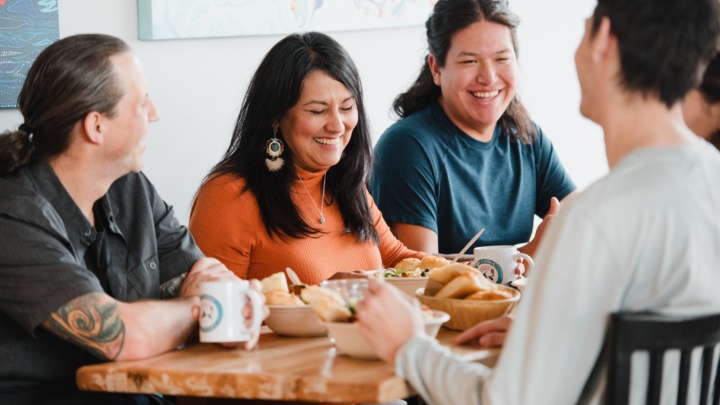
Kekuli Café, Canada’s first Indigenous franchise
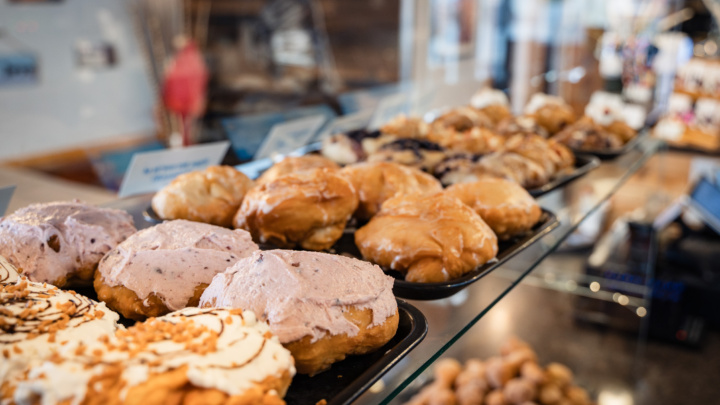
A kekuli is a traditional dwelling, the oldest type found by archaeologists in Canada. For the past fifteen years or so, it has also been a staple for bannock, tacos, coffee and berries!
Sharon Bond-Hogg, co-founder of Kekuli Cafe and a member of the Nooaitch First Nation, recommends trying the Saskatoon berry smoothie, made with the traditional prairie fruit that grows throughout the region. At Kekuli Cafe, Saskatoon berries also feature in BBQ sauce, tacos, syrups, and even refreshing lemonade.
She also suggests sampling the venison or salmon tacos for a taste of Indigenous-inspired cuisine.
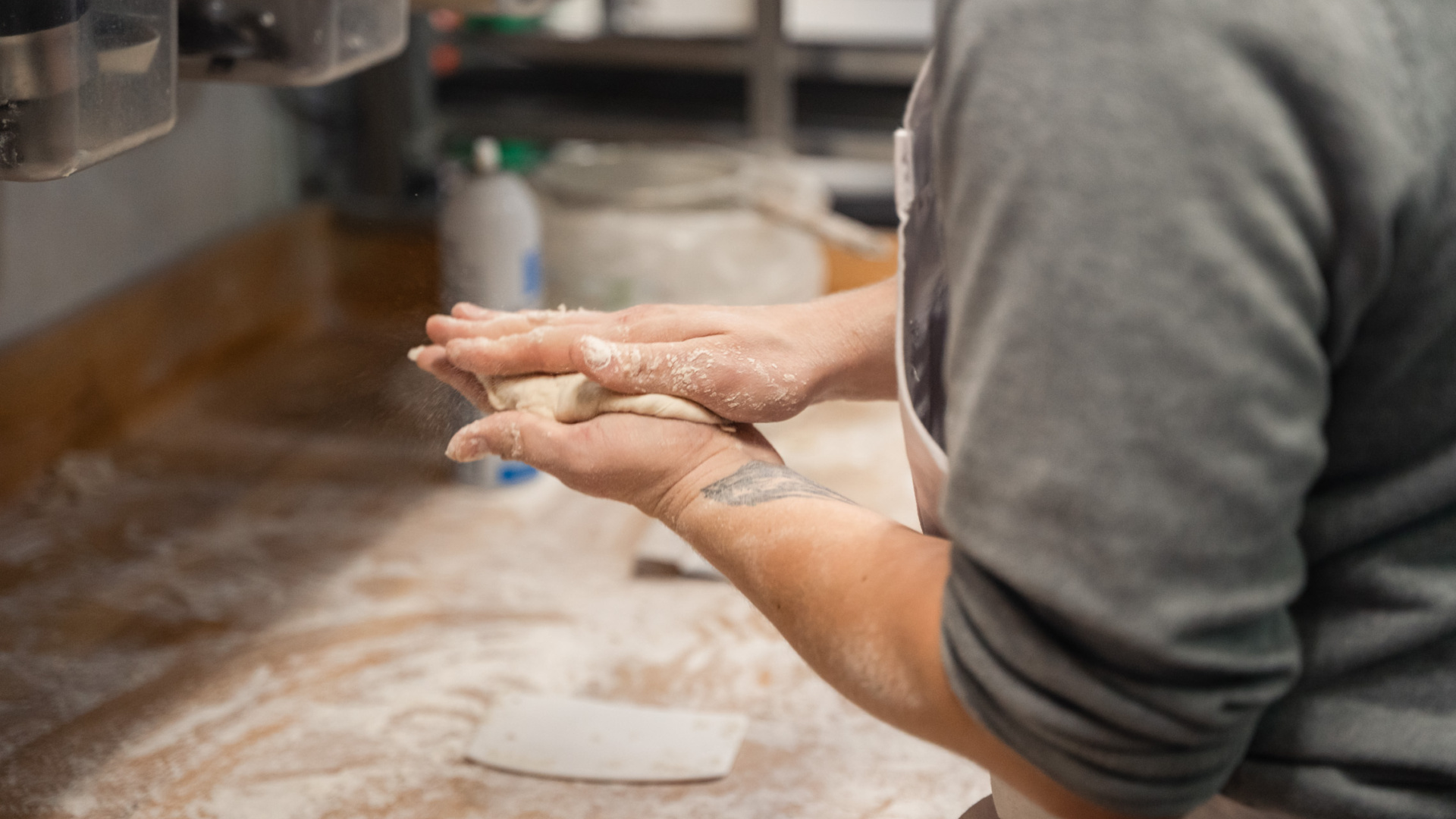
Top it all off with a bannock for dessert!
When the first Kekuli Cafe opened in Westbank, many visitors assumed it was already part of a larger chain. A few years later, that vision became reality with the launch of a franchise model. Today, Kekuli Cafe has four locations, including three in the Thompson-Okanagan region — Westbank (Kelowna), Merritt, and Kamloops. A fourth location, in Fort St. John in northeastern BC, is owned by the Doig River First Nation.
The cafes regularly showcase local Indigenous artists and musicians, creating vibrant community gathering spaces rooted in culture and creativity.
Kekuli also operates a popular food truck that puts bannock at the centre of every dish — keep an eye out for it at local festivals.
More recently, the owners launched Kápi Chido Coffee Roasters in West Kelowna to supply coffee to their growing family of cafes.
Getting to Merritt, Kamloops, Westbank, and Kelowna is straightforward by car. Merritt and Kamloops are both located along Highway 5, approximately a two-hour and three-hour drive from Abbotsford. From Merritt, continue east on Highway 97C to reach Kelowna and Westbank, which are about 70 minutes apart by car.
Nk’Mip Cellars, North America’s first Indigenous-owned winery
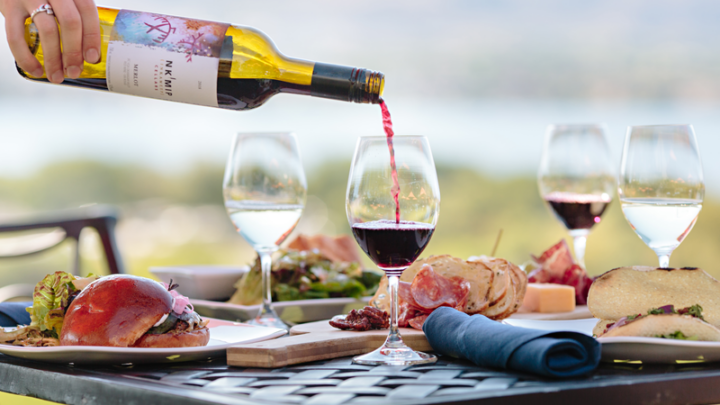
Head to Osoyoos to visit North America’s first Indigenous-owned winery!
Like many children, winemaker and Osoyoos First Nation member Justin Hall first tasted wine at a young age — and didn’t enjoy it. The first wine he truly liked was Nk’Mip Cellars’ 2002 Chardonnay, which he remembers as “smooth and soft.” At the time, he was planning a career in mechanics, but a job at Nk’Mip changed his path and ultimately led him to become a winemaker.
More than two decades later, Nk’Mip Cellars produces approximately 200,000 bottles annually and remains a pioneering force in Indigenous winemaking in Canada.
Hall’s personal favourite is Mer’r’y iym (pronounced mur’-eem’), a red blend made from Merlot, Cabernet Sauvignon, Cabernet Franc, and Malbec. “It’s the best meritage to represent the region,” he says.
For Hall, every glass reflects a connection to the land, and every bottle is an opportunity to bring people together. Sharing wine with family and friends remains one of his greatest pleasures.
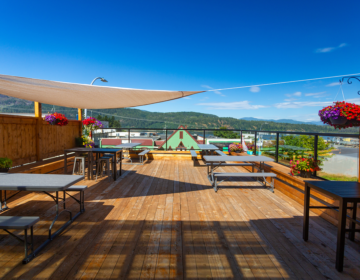
The winery is also home to the acclaimed Sweetgrass @Nk'Mip restaurant, where locally inspired dishes are served alongside sweeping views of vineyards, Osoyoos Lake, and the surrounding desert landscape. Seasonal menus highlight regional ingredients, with favourites such as bison burgers and duck confit enjoyed on the patio from spring through fall.
The Osoyoos First Nation owns 51% of Nk’Mip Cellars, with the remaining stake held by Arterra Wines Canada. “We have the final say,” says Hall.
While visiting Nk’Mip Cellars, travellers can also explore the nearby Nk’Mip Desert Cultural Centre for an immersive introduction to the region’s Indigenous culture and desert ecology. Farther north, the winery also operates a satellite tasting room at Oliver’s District Wine Village.
Getting to Osoyoos is easy by car. Located along Highway 3 near the U.S. border, the town is approximately a 3.5-hour drive east of Abbotsford and just under 1 hour and 45 minutes south of Kelowna via Highway 97.
Beyond cafés and wineries, the Thompson Okanagan is home to a growing number of Indigenous-owned food producers, restaurants, and accommodations that showcase the region’s flavours and hospitality.
Okanagan Select
Salmon is a staple of British Columbia, including in Indigenous cuisine.
In West Kelowna, Okanagan Select uses traditional selective fishing methods and commits to resource preservation.
At the Westbank First Nation warehouse, you’ll find fresh or frozen wild sockeye salmon, as well as canned salmon, smoked salmon, salmon jerky, and maple-candied salmon.
Niche Wine Co.
Perched on a hillside, this new and promising West Kelowna winery overlooks the lake. Niche Wine Co also offers luxury accommodations near the vineyards: the Outside Inn Cabins. These shipping container cabins are window-filled, the perfect place to gaze at the stars, the lake, and the mountains.
Osprey Nest Social House & Eatery
Owned by the Williams Lake First Nation, Osprey Nest Social House & Eatery offers a welcoming dining experience rooted in local culture and community. Located just north of the Thompson-Okanagan region, it’s well worth adding to your itinerary if your travels take you in this direction.
Experience the Thompson Okanagan Through Indigenous Flavours
From vineyard patios overlooking the desert hills of Osoyoos to bannock cafés buzzing with community, the Indigenous culinary experiences of the Thompson Okanagan offer travellers far more than great food and wine. Each stop reflects deep cultural connections to the land, local ingredients, and generations of tradition. Whether you’re sipping award-winning wine, tasting wild sockeye salmon, or enjoying fresh bannock, this region invites visitors to experience the stories, flavours, and hospitality of Indigenous communities across British Columbia.